Flood Control & Drainage · June 2025
Why Accra Floods Every Rainy Season — And What Can Be Done
Flooding is not inevitable. It is largely an engineering problem — and engineering problems have solutions. Here is an honest assessment from a drainage engineer based in Accra.
Every rainy season, parts of Accra flood. Roads become rivers, ground floors fill with water, and communities that have seen this cycle repeat for years brace themselves again. In 2015, flooding killed more than 150 people in a single night at the Kwame Nkrumah Circle fuel station disaster. That event exposed in the starkest possible terms what engineers who work in the city already knew: Accra's drainage infrastructure is dangerously inadequate for the city it serves.
But flooding in Accra is not simply a natural disaster. It is substantially an engineering failure — a failure of drainage design, planning enforcement, and infrastructure investment. And because it is an engineering problem, there are engineering solutions.
Why Accra Floods: The Engineering Causes
1. Rapid Urbanisation Has Outpaced Drainage Capacity
Accra's population has grown from under 400,000 in 1970 to over four million today. As the city expanded, natural vegetation and permeable soil — which once absorbed rainfall and slowed its journey to watercourses — were replaced with rooftops, concrete, and compacted laterite. This imperviousness dramatically increases the volume and speed of stormwater runoff. Drainage systems designed for a much smaller, less impervious city are now overwhelmed by routine rainfall events.
2. Natural Drainage Channels Have Been Blocked and Encroached Upon
Accra sits on a coastal plain dissected by a network of natural drainage channels — the Odaw River and its tributaries are the most significant. These channels should convey stormwater from inland catchments to the sea. Over decades, however, they have been encroached upon by development, narrowed by informal construction, and blocked by solid waste. A channel designed by nature to carry a 10-year flood flow cannot do so when it is half its original width and carrying decades of accumulated rubbish.
3. U-Drain Networks Are Undersized, Blocked, and Broken
The roadside U-drain network is the primary stormwater collection system across most of Accra. Many of these drains were installed decades ago and sized for much lower runoff volumes. Today they are routinely undersized, frequently blocked with debris and solid waste, and in many places structurally degraded. Water that should flow into the drain simply overtops it and floods the road.
4. Building Sites Drain Onto Roads
In the absence of properly designed and inspected site drainage, construction sites and completed developments frequently discharge stormwater directly onto roads rather than into drainage channels. Every roof that lacks gutters and downpipes, every paved compound without drainage outlets, adds to the volume of water that ends up on the street.
What Can Be Done: Practical Drainage Solutions
Site-Level Drainage Design
Every new development — residential or commercial — should have a site drainage plan prepared by a qualified drainage engineer before construction begins. This plan should establish finished floor levels above the likely flood level, route roof drainage to the drainage channel network (not the road), and size surface drainage to convey the 10-year storm event from the site without causing flooding on adjacent land. This is achievable at modest cost and should be standard practice on every project.
Properly Sized and Maintained U-Drains
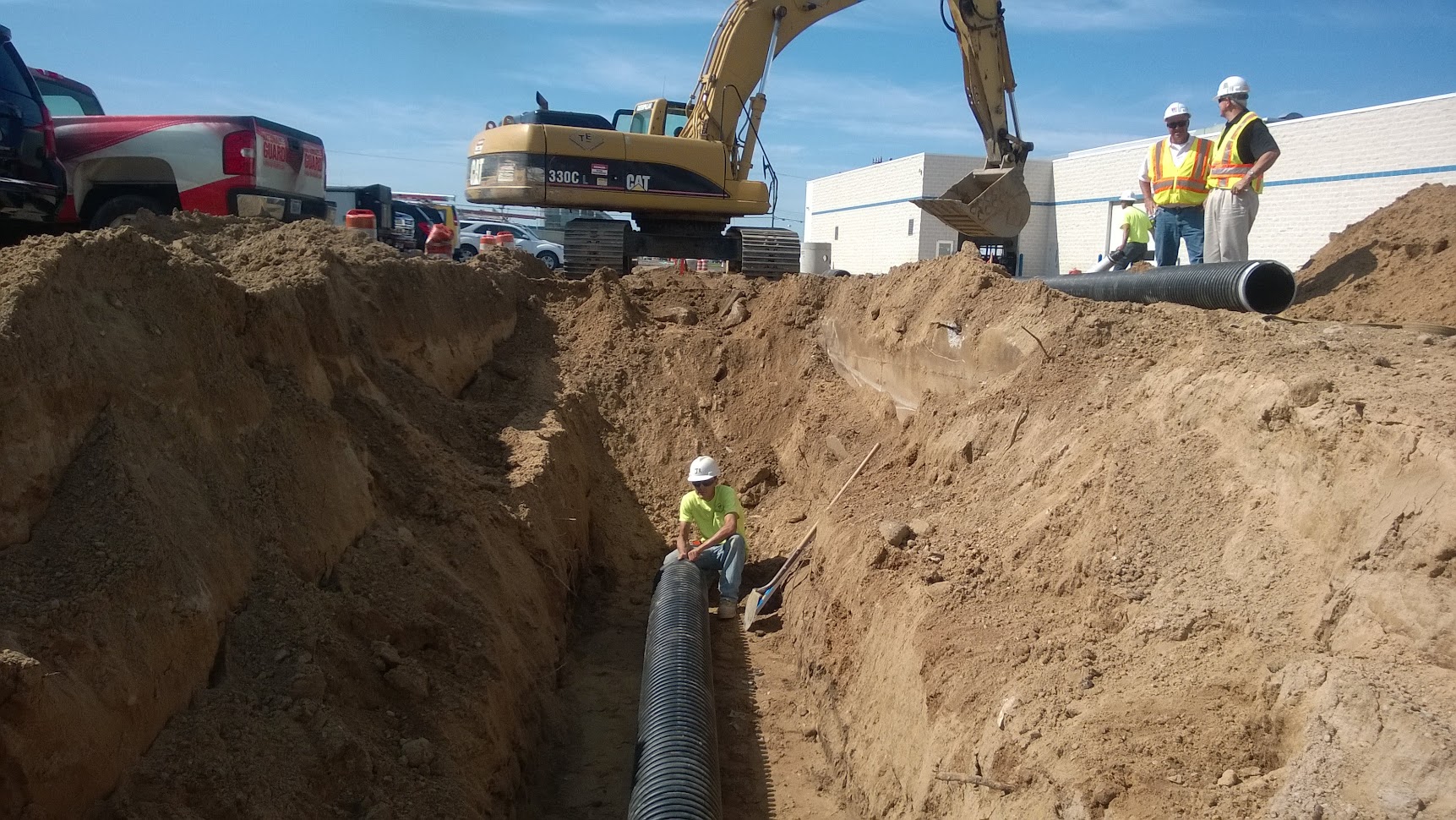
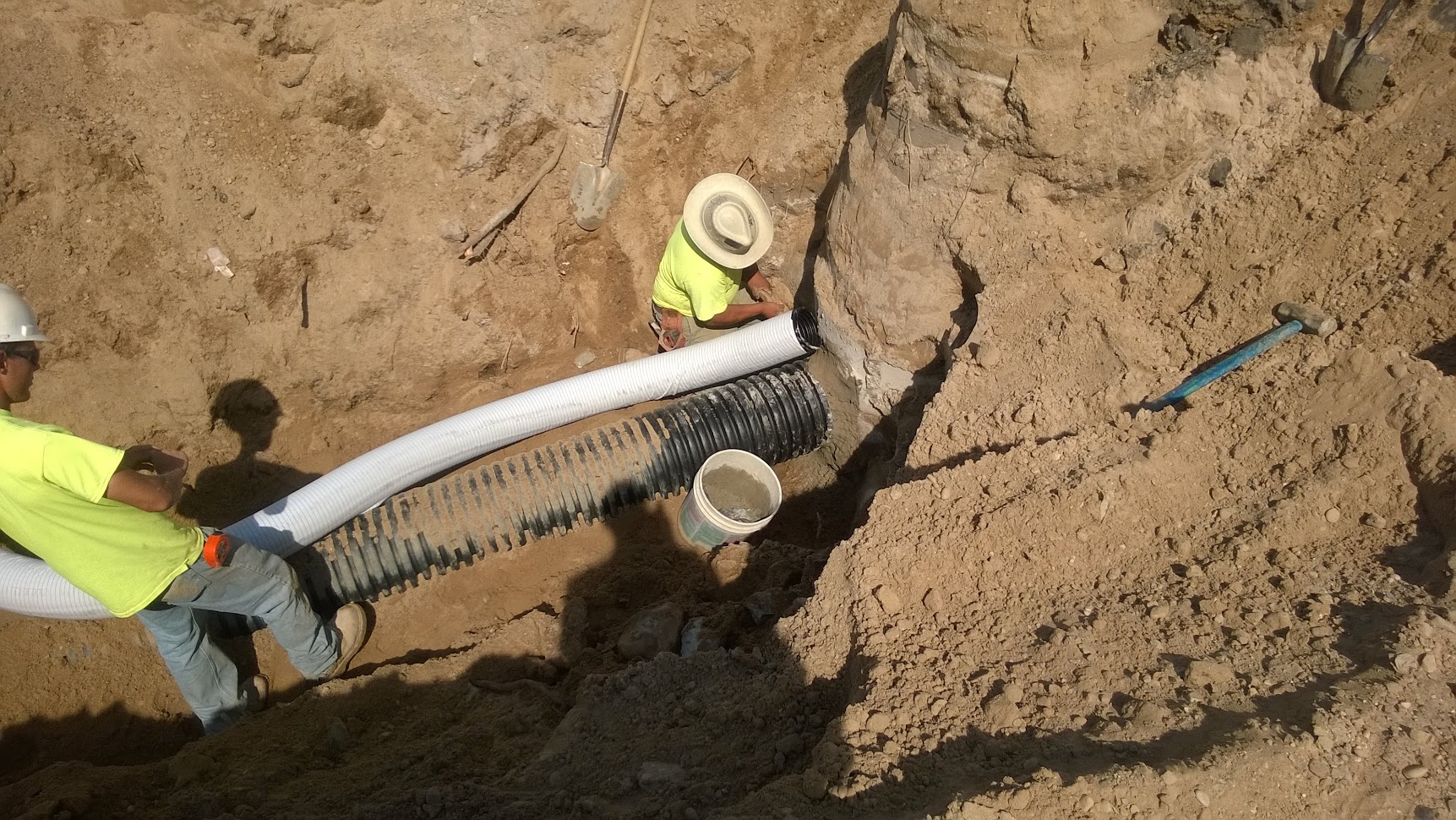
Where U-drains are to be constructed or replaced, sizing should be based on hydrological calculations for the contributing catchment — not on the width of the existing drain or the contractor's preference. A drain sized for a 5-year storm event will flood during a 10-year event. I have supervised U-drain construction in Accra and have seen firsthand how critical correct alignment, slope, and concrete quality are to long-term performance. A poorly constructed drain can be worse than no drain at all.
Detention and Attenuation
For larger developments, on-site stormwater detention — temporarily holding runoff in a basin or underground tank and releasing it slowly — can significantly reduce the peak flow that enters the drainage network. This is standard practice in the United States and Europe and is increasingly relevant in Accra as development intensifies. The key is sizing the detention facility correctly for the local storm return period and ensuring the outlet structure controls the discharge rate as designed.
Culvert Upgrades at Pinch Points
Many of Accra's worst flooding locations occur at undersized culverts — where a road crosses a drainage channel and the culvert opening is too small to pass the flood flow. Identifying and upgrading these pinch points through hydraulic analysis can dramatically reduce flood risk on the upstream catchment. This is targeted, cost-effective infrastructure investment.
What Developers Can Do Now
If you are planning to build in Accra or Greater Accra, there are immediate steps you can take to protect your investment from flood risk:
- Commission a site flood risk assessment before purchasing land. Some areas of Accra are in active flood plains and should not be developed without significant mitigation measures.
- Insist on a site drainage plan as part of your design package — not an afterthought, but a properly engineered drainage layout prepared before construction begins.
- Set finished floor levels at least 300–450mm above the highest known flood level on the site or adjacent road.
- Ensure all roof drainage connects to a drainage channel or soakaway — not to the road surface.
Conclusion
Flooding in Accra will not be solved overnight, and the city-wide infrastructure challenges are real. But at the project level, good drainage engineering can protect your building and your investment from flood damage that is, in most cases, preventable. The cost of getting drainage right at the design stage is a fraction of the cost of remediation after the event.
If you need a flood control or drainage engineer in Accra, I am available to carry out site assessments, prepare drainage layout plans, and supervise drainage construction across Greater Accra and Ghana.
Drainage Problem on Your Site?
I provide site drainage assessments and design across Accra and Greater Accra.
Get in Touch →